
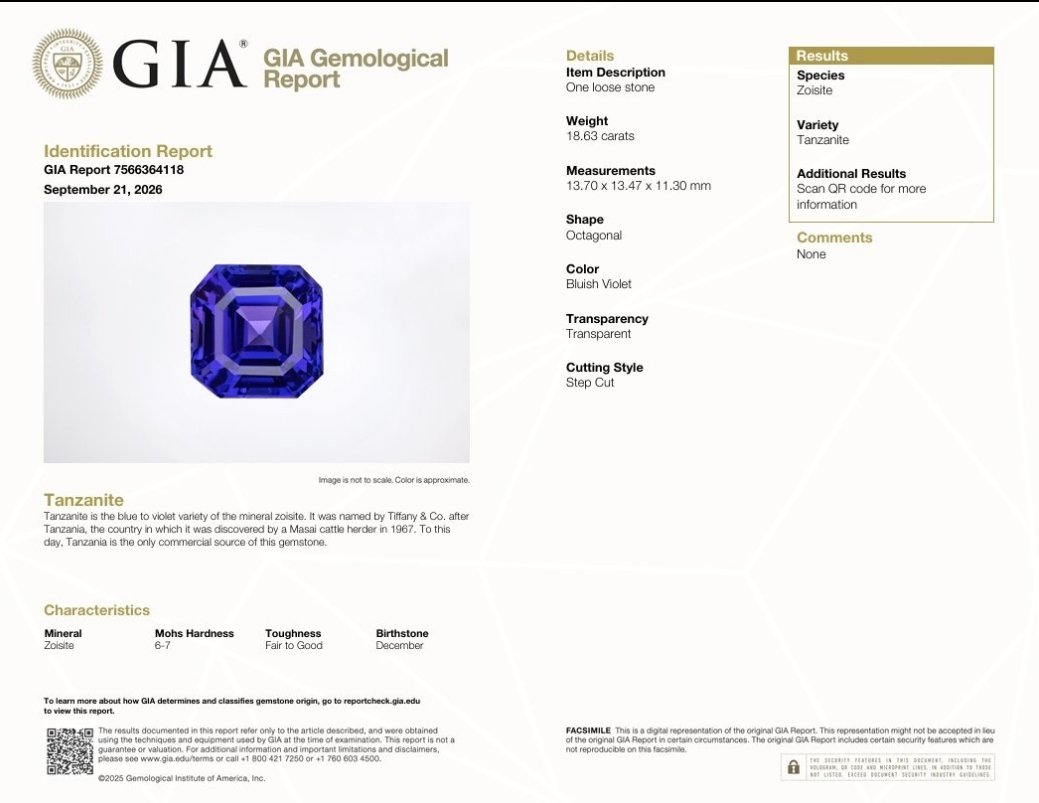
A gemstone certificate, commonly referred to as a gemstone identification or grading report, provides valuable information about the identity and characteristics of a gemstone. However, simply receiving a printed certificate does not mean that its authenticity and connection to the physical gemstone have been independently verified. At Shri Hari Gems & Jewels, we believe that transparency, accurate gemstone information and customer confidence are fundamental to buying fine gemstones and luxury jewellery.Every jewel of Shri Hari Gems and Jewels has the IGI/GIA laser inscribed by the respective laboratory in inner side of the ring not visible by unaided eye. In this guide, we explain how to verify a gemstone certificate, how to check GIA and IGI reports, what information to examine and how laboratory reports can influence a gemstone's marketability and perceived value. 1. What is a gemstone certificate? A gemstone laboratory report is an independent gemological assessment issued by a professional gemological laboratory. Depending on the laboratory and report type, it may provide information about: Gemstone identification and variety. Whether the material is natural or laboratory-grown. Detectable treatments or enhancements. Carat weight. Measurements and dimensions. Shape and cutting style. Colour and transparency. Geographic origin, where the laboratory offers an origin opinion and can determine it. Leading international gemological laboratories include:
GIA – Gemological Institute of America.
IGI – International Gemological Institute.
GRS – GemResearch Swisslab.
SSEF – Swiss Gemmological Institute.
Gübelin Gem Lab.
An important distinction: not every laboratory report provides a complete grading assessment, geographic origin or commercial valuation. Buyers should understand exactly what the particular report covers.
2. How to verify a gemstone certificate online
One of the most important steps when buying a certified gemstone is checking the report directly through the issuing laboratory's official website.
A printed document or a photograph of a certificate alone is not sufficient proof.
Step 1: Locate the laboratory report number
Find the unique report number printed on the certificate.
Check that the number is clearly visible and has not been altered.
Step 2: Visit the official laboratory website
Use the issuing laboratory's own report verification service.
For example:
GIA Report Check: https://www.gia.edu/report-check-landing
IGI Report Verification: https://www.igi.org/verify-Your-REPORT/
Avoid relying on unofficial websites or links supplied by an unknown seller.
Step 3: Enter the report number
Enter the report number into the official verification portal.
Check whether the laboratory's online record corresponds to the document presented to you.
Compare the available details, including:
Gemstone variety and species.
Carat weight.
Measurements.
Shape and cutting style.
Colour description.
Treatment information, where provided.
Origin information, where applicable.
Report date and photograph, where available.
Step 4: Compare the report photograph with the gemstone
If the laboratory provides an image of the examined gemstone, compare it with the actual stone.
Look for distinctive characteristics such as facet arrangement, inclusions, colour distribution and other visible identifying features.
A photograph can help establish whether the physical gemstone appears to correspond to the report, but visual comparison alone is not conclusive.
Step 5: Check laser inscriptions where applicable
Some diamonds and certain gemstones carry a microscopic laser inscription on their girdle.
When present, examine the inscription under suitable magnification and check whether it matches the report number.
However, not every gemstone or laboratory report includes a laser inscription. Its absence does not automatically mean that a report is fraudulent.
For mounted jewellery, a qualified gemologist may need to examine the stone carefully to access the inscription.
3. What should you check on a gemstone certificate?
Understanding the details printed on a gemstone report is just as important as verifying its report number.
Here are the main specifications buyers should examine.
Report detail
What it tells you
Species and variety
Identifies the gemstone
Natural or laboratory-grown
Establishes the material's growth origin
Weight
Gemstone weight in carats
Measurements
Length, width and depth
Shape
Outline of the gemstone
Cutting style
Arrangement of facets
Colour
Laboratory's colour description
Treatment
Detectable enhancements or treatments
Geographic origin
Laboratory opinion, when available
Why gemstone treatment information matters
Treatment can significantly influence how a gemstone is perceived and priced in the market.
Common examples include:
Heat treatment in sapphires and rubies.
Clarity enhancement in emeralds.
Irradiation in certain coloured gemstones.
Dyeing and impregnation in some gem materials.
Buyers should carefully read the treatment comments on the actual report.
An absence of a treatment comment should not automatically be interpreted as proof that every possible treatment has been ruled out. Always refer to the laboratory's stated testing scope and terminology.
Why geographic origin matters
The origin of a natural gemstone can be commercially significant.
For example, Kashmir sapphires, Sri Lankan sapphires, Colombian emeralds and Burmese rubies have distinctive market associations.
However, geographic origin is a laboratory opinion based on gemological evidence, where the laboratory offers that service. Not every gemstone type is eligible for an origin determination, and not every examination produces a conclusive result.
Buyers should never assume a gemstone's origin solely from its appearance or a seller's description.
4. GIA vs IGI: Understanding gemstone certification
GIA and IGI are two internationally recognised gemological laboratories.
Both provide reports used by gemstone professionals, jewellery businesses and consumers.
However, buyers should understand that their report types, examination services and reporting terminology may differ.
GIA – Gemological Institute of America
GIA is widely recognised for its gemological research, diamond grading and coloured gemstone identification services.
Its coloured gemstone reports can describe:
Gemstone identity.
Natural or laboratory-grown status.
Detectable treatments.
Weight and measurements.
Shape and cutting style.
Colour and transparency.
Geographic origin, when an eligible origin report is requested and an opinion can be determined.
GIA offers both Colored Stone Identification Reports and Colored Stone Identification & Origin Reports.
Official website: https://www.gia.edu/
IGI – International Gemological Institute
IGI provides gemological identification and grading services for diamonds, coloured gemstones and jewellery.
Its reports are used throughout the international jewellery trade.
Depending on the report type, buyers may find information about:
Gemstone identity.
Weight and measurements.
Colour and clarity grades, where applicable.
Treatment information.
Diamond grading characteristics.
Jewellery specifications.
Official website: https://www.igi.org/
Is GIA better than IGI?
There is no single answer that applies to every gemstone.
The appropriate laboratory depends on the gemstone variety, the type of report required, the buyer's market and the information being sought.
It is also important not to assume that a GIA grade and an IGI grade are automatically interchangeable.
For diamonds, colour and clarity grading should be evaluated according to the issuing laboratory's grading methodology and the individual stone.
For coloured gemstones such as emeralds, rubies and sapphires, colour, transparency, treatment, origin and individual gem characteristics play important roles.
A buyer should assess the gemstone itself rather than relying exclusively on the laboratory name.
5. How gemstone certification affects price and resale value
Certification can improve buyer confidence by providing independently documented gemological information.
This is particularly important when purchasing high-value natural coloured gemstones.
Several factors influence the market value of a certified gemstone:
1. Gemstone identity
Knowing whether a stone is a natural sapphire, ruby, emerald or another material is fundamental to evaluating its market position.
2. Colour quality
Colour is one of the most important value factors for many coloured gemstones. Hue, tone, saturation and overall visual appearance can influence desirability.
3. Treatment status
A natural untreated gemstone may occupy a different market segment from a comparable treated gemstone. The extent and type of treatment matter.
4. Geographic origin
For certain gemstones, a documented origin opinion can influence buyer interest and market positioning.
5. Cut and proportions
Cutting quality, symmetry, proportions and visual performance influence the attractiveness of a gemstone.
6. Laboratory report
A recognised laboratory report can help buyers understand the gemstone and make informed purchasing decisions.
However, certification does not guarantee a particular selling price, investment return or resale value.
The actual price depends on the individual gemstone, market demand, commercial quality, provenance and the transaction circumstances.
6. Can a gemstone certificate be fake?
Unfortunately, fraudulent or misleading documents can occur in the gemstone trade.
Some potential warning signs include:
A report number that cannot be located in the official laboratory database.
Details that differ between the printed report and online record.
Altered photographs or report details.
A gemstone that does not match the report description.
A seller unwilling to allow independent verification.
Unsupported claims about origin or treatment.
Remember that a valid report number alone does not prove that the gemstone in front of you is the exact stone examined by the laboratory.
Where the purchase value is substantial, consider having the physical gemstone independently examined by a qualified gemologist or submitting it to an appropriate laboratory.
7. Why independent gemstone verification matters before purchasing
For buyers, collectors and jewellery businesses, gemstone verification is an important part of responsible purchasing.
Before completing a significant gemstone transaction, consider the following checklist:
Verify the laboratory report through its official website.
Match the report number and available gemstone photograph.
Compare weight and measurements.
Review the treatment disclosure.
Check origin information where applicable.
Inspect any laser inscription, if present.
Obtain an independent examination when necessary.
Keep the original report and purchase documentation.
These precautions help buyers make better-informed decisions and reduce the risk of purchasing a gemstone with inaccurate documentation.
8. How Shri Hari Gems & Jewels approaches gemstone transparency
At Shri Hari Gems & Jewels, we believe that exceptional gemstones deserve accurate documentation and transparent presentation.
Our work involves sourcing natural coloured gemstones, selecting distinctive stones and creating fine jewellery that showcases their individual character.
We recognise the importance of independent gemological reports from recognised laboratories, including GIA and IGI.
For our international customers, gemstone documentation is an important part of building confidence in every transaction.
Our approach focuses on:
Accurate gemstone descriptions.
Transparent disclosure of available treatment information.
Laboratory documentation where available.
Clear product photographs and specifications.
Professional jewellery craftsmanship.
Responsible communication with international buyers.
Whether you are looking for an exceptional natural sapphire, emerald, ruby, Tanzanite or a distinctive piece of fine gemstone jewellery, understanding the documentation is an important part of your purchasing journey.
Frequently Asked Questions About Gemstone Certificates
1. How can I verify a GIA gemstone certificate?
Visit the official GIA Report Check website, enter the report number and compare the online record with the physical document and gemstone.
2. How can I check an IGI certificate online?
Visit the official IGI report verification portal and enter the report number. Compare the retrieved information with the report you received.
3. Is a gemstone certificate proof that a gemstone is natural?
A laboratory report can provide an identification conclusion about whether the material is natural or laboratory-grown, depending on the report type and examination.
4. Does every certified gemstone have a laser inscription?
No. Laser inscriptions are not available or applicable to every gemstone or report. Check whether the particular report and gemstone include one.
5. Which is better, GIA or IGI?
Both laboratories provide recognised gemological services. The best choice depends on the gemstone, report requirements, examination scope and intended market.
6. Does a GIA certificate increase gemstone value?
A GIA report can improve buyer confidence and document important gemological characteristics. However, the report itself does not guarantee a higher price or resale value.
7. Can two laboratories give different opinions on the same gemstone?
Yes. Differences in examination methods, available technology, interpretation and report scope can result in differing opinions. For significant discrepancies, seek clarification or an additional independent examination.
8. What should I do if a gemstone certificate cannot be verified?
Contact the issuing laboratory directly using its official contact information. Do not rely solely on the seller's explanation. If the purchase is significant, arrange an independent gemological examination.
Final Thoughts
A beautiful gemstone deserves more than an attractive appearance. It deserves accurate identification, transparent documentation and responsible presentation.
Understanding how to verify a gemstone certificate helps buyers protect their interests and purchase with greater confidence.
At Shri Hari Gems & Jewels, we believe that trust is as important as beauty.
Crafted with Integrity. Treasured for Generations.
Explore our collection of exceptional natural coloured gemstones and fine jewellery at https://shriharigemsjewels.com/.