
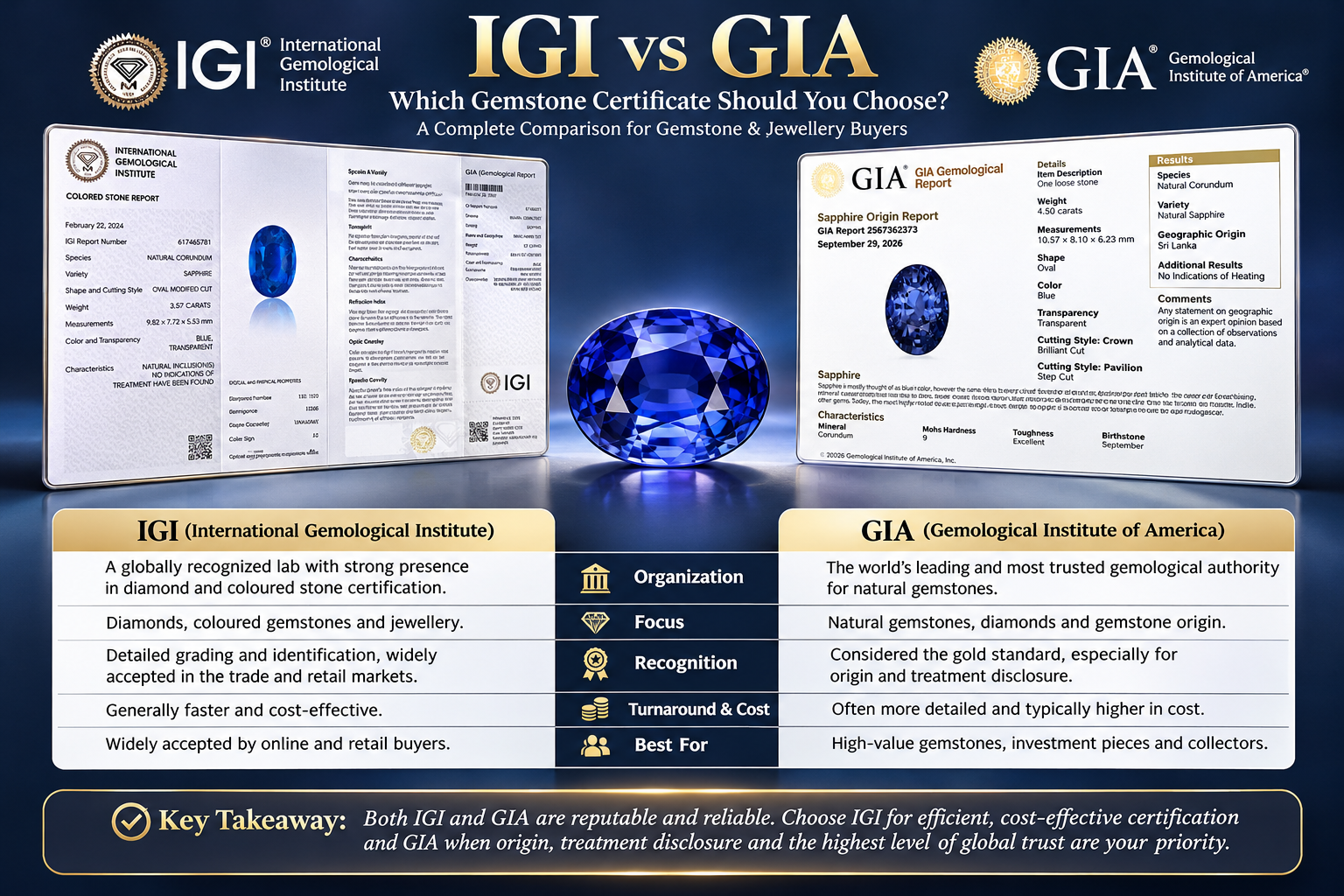
Both laboratories provide independent gemological reports, helping buyers understand the identity and characteristics of a gemstone. However, their report formats, services and the information provided can differ.
So, which should you choose: GIA or IGI?
The answer depends on the gemstone you are purchasing, the information you need and the purpose of the certification.
1. What is GIA?
The Gemological Institute of America (GIA) is an independent, nonprofit gemological research and education organisation established in 1931. It is internationally recognised for its work in gemological research, education, gemstone identification and diamond grading.
For coloured gemstones, GIA provides different report services, including:
Colored Stone Identification Report: Identifies the gemstone, states whether it is natural or laboratory-grown, describes its characteristics and lists detectable treatments.
Colored Stone Identification & Origin Report: Provides the identification information along with a geographic-origin opinion when determinable and applicable.
GIA reports can include details such as gemstone variety, shape, cutting style, weight, measurements, colour and a photograph.
GIA offers geographic-origin opinions for selected gemstone varieties, including sapphire, ruby and emerald.
2. What is IGI?
The International Gemological Institute (IGI) is an independent gemological laboratory established in 1975. It provides gemstone identification, diamond grading and jewellery reporting services.
IGI offers coloured gemstone reports that can provide information including:
Natural, laboratory-grown or simulant identification.
Gemstone species and variety.
Colour and transparency.
Shape, cutting style and measurements.
Treatment information where applicable.
Geographic origin when conclusively determined.
A photograph of the gemstone.
IGI also provides reports for finished jewellery, helping buyers understand the gemstones and jewellery components included in a piece.
3. GIA vs IGI: What is the difference?
Both laboratories provide useful independent gemological information. The most important differences for coloured gemstone buyers are the report services available and the information included.
Comparison
GIA
IGI
Gemstone identification
Yes
Yes
Natural or laboratory-grown identification
Yes
Yes
Treatment information
Detectable treatments
Treatment information as applicable
Geographic origin
Available for selected varieties through applicable reports
Stated when conclusively determined
Gemstone photographs
Available
Available
Loose coloured gemstones
Yes
Yes
Finished jewellery reports
Services vary by report type
Jewellery reporting available
Diamond grading
Yes
Yes
Important: GIA and IGI do not necessarily use identical report formats or terminology. Always read the actual report rather than assuming that every service includes the same examinations.
4. Which certificate is better for sapphires?
Sapphires are among the most sought-after coloured gemstones, particularly fine blue sapphires from Sri Lanka, Kashmir and Madagascar.
When purchasing a sapphire, buyers should pay attention to:
Whether the sapphire is natural or laboratory-grown.
Whether any detectable treatment is present.
Whether the laboratory provides an origin opinion.
The gemstone's colour, clarity, cut and dimensions.
Whether the report details match the actual gemstone.
For buyers interested in geographic origin, a GIA Identification & Origin Report is one option to consider. IGI also provides origin information when its gemological analysis conclusively determines it.
Remember that a country-of-origin opinion is not a guarantee of quality or value. Two sapphires from the same country can have very different appearances, rarity and market prices.
5. Which certificate is better for emeralds?
Emeralds are particularly interesting because treatments and clarity enhancement can significantly influence their commercial desirability.
When buying a natural emerald, consider:
Confirmation that the gemstone is natural.
Disclosure of detectable treatments.
The nature and extent of clarity enhancement, where reported.
Geographic origin, if available.
Colour, transparency and overall appearance.
Both GIA and IGI offer coloured gemstone reporting services. Buyers should check the precise treatment terminology and comments in the individual report.
For emeralds, understanding the treatment information is particularly important before making a purchase.
6. Does a GIA or IGI certificate guarantee the gemstone's value?
No. A gemological report is not a valuation certificate.
A laboratory report helps establish the identity and characteristics of a gemstone. It does not guarantee its selling price, investment return or future market value.
The commercial value of a coloured gemstone depends on several factors:
Colour and saturation.
Clarity and transparency.
Carat weight.
Cut and proportions.
Natural rarity.
Treatment status.
Geographic origin, where relevant.
Current market demand.
Two gemstones with similar laboratory reports may still have significantly different market values.
7. How can you verify a GIA or IGI certificate?
Before purchasing an expensive gemstone, take a few minutes to verify its laboratory report.
For GIA reports: Visit the official GIA report verification service: https://www.gia.edu/report-check-landing
For IGI reports: Visit the official IGI report verification service: https://www.igi.org/
Check the following details:
Report number.
Gemstone identity and variety.
Carat weight and measurements.
Shape and cutting style.
Natural or laboratory-grown status.
Treatment comments.
Origin information, if provided.
Where possible, compare the gemstone itself with the report photograph and physical description. For a high-value purchase, consider an independent examination if anything appears inconsistent.
8. Our recommendation: Which certificate should you choose?
There is no universal winner between GIA and IGI. Both can provide useful independent gemological information.
Consider the following approach:
For rare natural sapphires, rubies and emeralds: Consider a report that provides the identification, treatment information and geographic-origin opinion you need. GIA's Identification & Origin Report is one option for eligible varieties.
For natural coloured gemstones: GIA and IGI both offer identification services. Compare the exact report contents before deciding.
For finished gemstone jewellery: Consider a laboratory report that documents the centre stone and relevant jewellery details.
For diamond jewellery: Compare the specific diamond grading or jewellery report services offered by each laboratory.
The best certificate is the one that gives you the information necessary to make a confident and informed purchase.
9. Why certification matters at Shri Hari Gems & Jewels
At Shri Hari Gems & Jewels, we believe that trust begins with transparency.
Our collection focuses on natural coloured gemstones and fine jewellery, including exceptional sapphires, emeralds, rubies, tanzanites and other precious gemstones.
We understand that international buyers want more than an attractive gemstone. They want confidence in its identity, treatment disclosure and documented characteristics.
That is why we value independent gemological reports from recognised laboratories such as GIA and IGI.
Whether you are purchasing a rare unheated Sri Lankan sapphire, a fine Colombian emerald or a bespoke coloured gemstone jewellery creation, we encourage you to understand the gemstone and its documentation before making your decision.
Crafted with Integrity. Treasured for Generations.
Frequently Asked Questions
1. Is GIA better than IGI?
Neither laboratory is universally better for every gemstone. Compare the services and information provided in the specific report.
2. Are GIA and IGI certificates internationally recognised?
Both laboratories are internationally recognised. Buyers should still verify each report and understand its scope.
3. Does GIA certify that a sapphire is unheated?
GIA can report detectable evidence of heat treatment or state that no indications of heating were detected. The precise wording of the report matters.
4. Can IGI identify the origin of an emerald?
IGI may state geographic origin when its gemological analysis conclusively determines it. Check the individual report.
5. Does a gemstone certificate increase its value?
A report can improve buyer confidence and support transparent disclosure, but it does not automatically increase the gemstone's market value.
6. Can I buy a gemstone without a certificate?
Yes. However, for significant purchases, an independent gemological report is advisable, particularly when natural origin, treatment or geographic origin is important to the buyer.
7. How old should a gemstone certificate be?
There is no universal expiry date for a gemstone report. However, buyers should verify its authenticity and ensure that the report corresponds to the gemstone being sold.
8. Can a certificate guarantee that a gemstone is valuable?
No. A report identifies and describes gemological characteristics. Market value depends on quality, rarity, demand and other commercial factors.
Explore Certified Natural Gemstones
Looking for a natural sapphire, ruby, emerald or another exceptional coloured gemstone?
Explore the collection at Shri Hari Gems & Jewels or contact our team for assistance in selecting a gemstone with the documentation and characteristics you require.
Discover exceptional natural gemstones: https://shriharigemsjewels.com/ruby https://shriharigemsjewels.com/blue-sapphire https://shriharigemsjewels.com/emerald https://shriharigemsjewels.com/natural-gemstones